
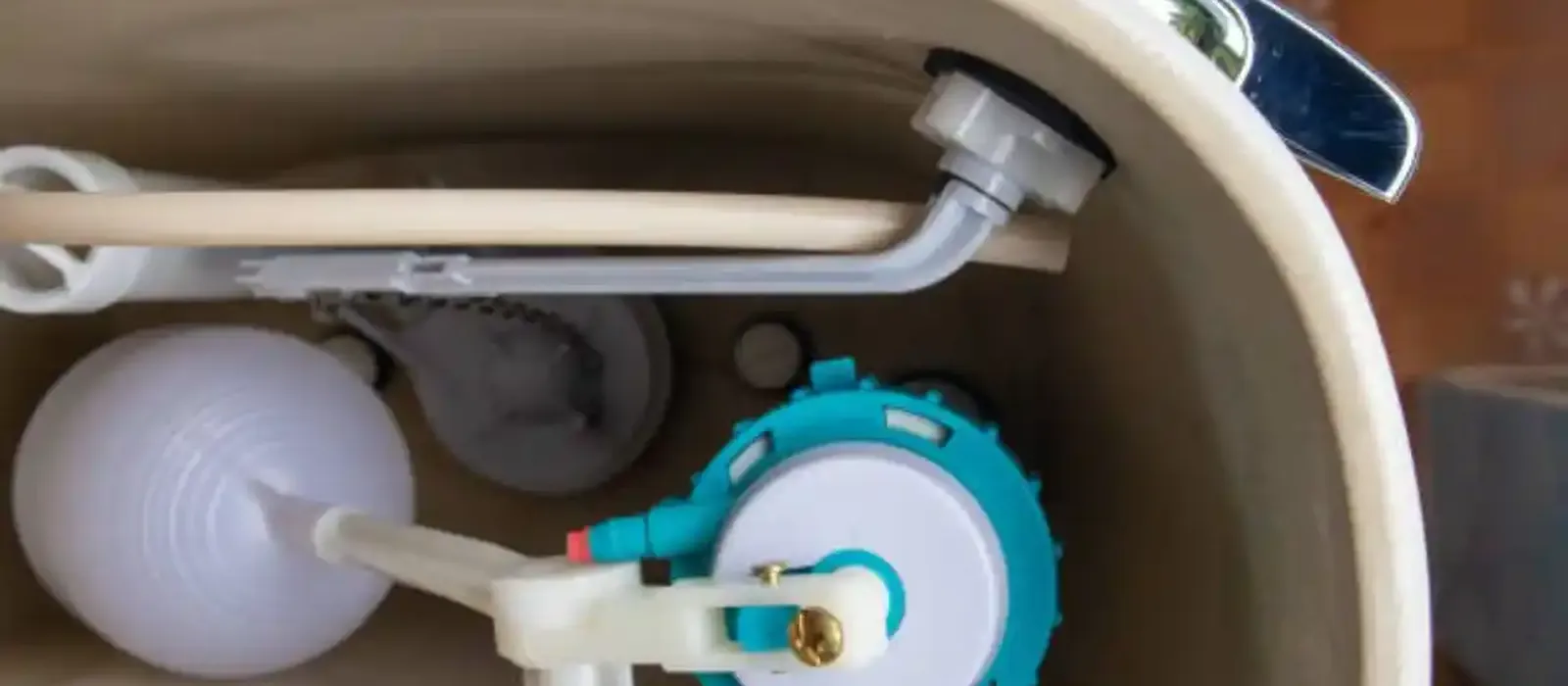
How to replace a toilet fill valve and stop the running
The fill valve is the tall part on the left side of the tank. It refills the tank after each flush and shuts off when the water reaches the right level. When it wears out, the toilet may run, refill slowly, hiss, or overfill into the overflow tube.
Replacement takes about half an hour, a new valve and a few tools. Most universal fill valves fit most toilets and adjust to the tank height.
Follow the steps below, and use the troubleshooting list if the toilet still runs afterward.
Signs the fill valve has failed
Check these before you buy a part.
Constant running
The tank never stops filling. A float that sits too high or a worn seal is the cause.
Hissing after a flush
Water sneaks past a worn valve.
Slow refill
Debris or mineral buildup clogs the valve.
Water into the overflow tube
The water level is set too high, or the valve does not shut off.
A phantom flush
A slow leak in the tank drops the level until the valve refills it.
Installing a new fill valve
You need a new fill valve, a sponge, a bucket, pliers and a small wrench.
Shut off and drain
Close the supply valve, flush and sponge out the remaining water.
Disconnect the supply line
Unscrew the coupling nut under the tank and remove the supply line.
Remove the old valve
Loosen the locknut under the tank and lift the valve out.
Set the new valve
Adjust it to the right height, with the top about an inch above the overflow tube, then insert it and tighten the locknut by hand and a quarter turn.
Connect the refill tube
Clip the small tube to the overflow tube, aimed into the tube, not onto it.
Reconnect and test
Attach the supply line, open the valve slowly, check for leaks and set the water level.
Toilet running or overflowing?
Close the supply valve and call the 24/7 line if it will not stop.
Setting the water level
A correct level saves water and keeps the flush strong.
| Symptom | Adjustment |
|---|---|
| Water reaches the overflow tube | Lower the float or turn the adjuster screw to reduce the level |
| Weak flush | Raise the level slightly, within the mark on the tank |
| Water level set at the fill line | Leave it where it is |
If the toilet still runs
A new fill valve does not fix a worn flapper. If water still seeps into the bowl, the flapper is leaking. Replace it with the same style, and make sure the chain has a little slack. A flapper that does not seal wastes water silently, and food coloring in the tank shows color in the bowl if it leaks.
If water leaks at the base or the tank bolts, that is a different repair. Our toilet repair and installation page explains each failure.
Why a running toilet costs more than you think
A running toilet can waste many gallons an hour without any sound. The EPA lists toilets among the most common sources of household leaks. If your water bill climbs for no reason, test the toilets first, then ask about leak detection if the meter still turns.
Choosing the right fill valve
Universal fill valves fit most standard toilets, and they adjust in height. Some toilets use a special design, such as a pressure-assist tank or a model with a side-mounted valve, and those need a matching part from the maker. Take a photo of the old valve and the tank before you shop.
A quiet-fill valve costs a little more and runs more softly. A float-cup style is common and easy to adjust. Whichever you choose, make sure the shank length fits your tank and that the supply connection matches your line.
Problems after the new valve goes in
Most are small adjustments.
Slow leak at the tank bottom
The locknut or the washer is not seated. Tighten a quarter turn.
Constant hissing
The refill tube may be pushed onto the overflow tube instead of clipped in place.
Water keeps running
The float is set too high or the flapper is leaking.
Noisy refill
Open the supply valve fully, or fit a quiet-fill model.
When the valve is not the whole story
If you replace the fill valve and the flapper and the toilet still runs, look at the overflow tube. A cracked tube leaks into the bowl even when everything else is tight. Check the tank for cracks, and look at the flush valve seat for pitting.
An old toilet may be worth replacing instead of repairing in pieces. The EPA says WaterSense labeled toilets can save a family about 13,000 gallons and $130 a year on average. That is a national figure, but it shows why a very old toilet may cost more to keep.
Leaks, bills and adjustments in Southlake and Grapevine
A running toilet shows up on the water bill, and the rules for leak credits are set by each city. Southlake offers a residential leak adjustment once in a rolling twelve months. It requires a registered Eye on Water account and documentation within 90 days, and pool fills are excluded. EyeOnWater is a free app that sends leak alerts.
After the February 2021 storm the city told residents with unusual bills to contact utility billing, and City Hall's main line is (817) 410-3000. If you have an unexplained spike, call the city and keep your repair receipt.
Source type: City of Southlake leak adjustment and EyeOnWater pages and City of Grapevine storm response reporting.
Questions homeowners ask
How do I know if the fill valve or the flapper is the problem?
If water refills continuously with the tank level at the overflow tube, it is the fill valve. If the tank drops and refills, it is the flapper.
Does Southlake credit a water bill for a running toilet?
Southlake offers a leak adjustment once in a rolling twelve months with a registered Eye on Water account and documents within 90 days. Check with the town for what qualifies.
How long does the job take?
About half an hour for most people.
Do I need to shut off the whole house?
No. The supply valve behind the toilet is enough.
What if the supply valve will not close?
Shut off the main valve, and have a plumber replace the stop valve.
A fill valve is cheap, easy to replace and often the whole fix. Replace it, set the level, test the flapper and save the water that the toilet was wasting.
For nearby help, see our Southlake plumbing page and the service area page.