
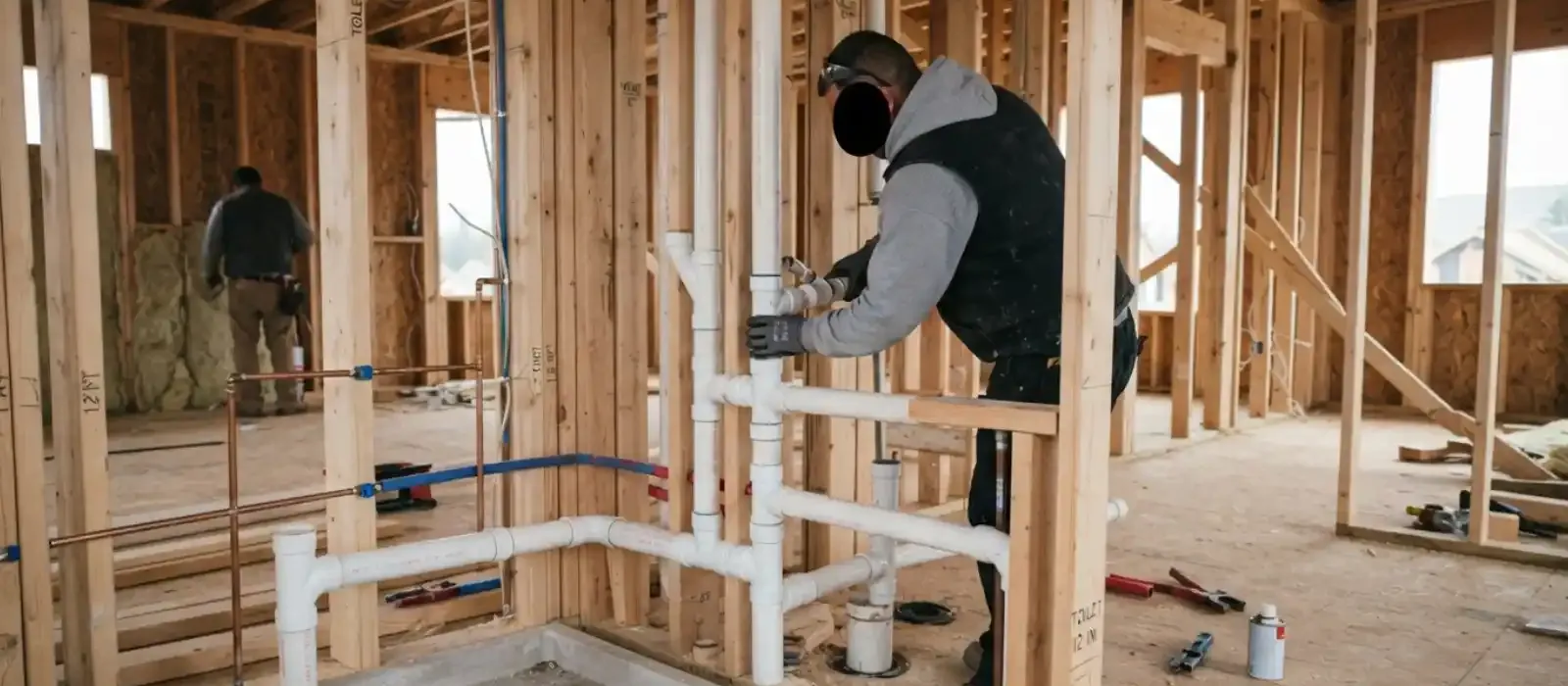
Choosing between plumbing installation and replacement
Homeowners use two words for plumbing work that are not the same. Installation means adding something that was not there, such as a new bathroom, a new line to a grill or a new fixture. Replacement means taking out what is there and putting in a new one, from a single faucet to every supply pipe in the house.
The difference matters because it changes the permit, the scope and the price. A like-for-like swap is usually small. A new line behind finished walls is not.
This guide helps you sort your project into one or the other and shows what a good plumber will ask.
Installation and replacement compared
Most projects fall clearly into one group.
| Question | Installation | Replacement |
|---|---|---|
| What it is | Adding something new | Swapping something that exists |
| Typical examples | A new bathroom, an outdoor kitchen line, a laundry hookup | A water heater, a toilet, a faucet, old supply pipe |
| Permit likelihood | More often needed | Depends on the job |
| Biggest cost driver | Running new lines and drains | Access and the age of what is behind |
Questions a plumber will ask
Good answers save a second visit.
What is the goal?
A new fixture, a replaced one or a full remodel.
Where is the water and drain now?
The distance to existing lines drives the work.
What is the house built on?
Slab, crawlspace and basement houses are plumbed differently.
What material is the existing pipe?
Old pipe may need to be replaced when you connect to it.
Who else is on the job?
Plumbing has to match the schedule of framers, electricians and inspectors.
How a planned job runs
Rough-in comes before the walls close.
Plan and price
The plumber measures, plans the routes and gives a clear price before work starts.
Permit
If one is needed, it is pulled before the work.
Rough-in
Drains, vents and supply lines are set and tested.
Inspection
Where required, the city inspects before the walls close.
Finish
Fixtures are set, connected and tested.
Planning plumbing work?
Call and a plumber can walk through your project and give a clear price.
When replacement beats a string of repairs
If a part of the system keeps failing, replacing it can cost less than repairing it again and again. A faucet with a worn body, a toilet that leaks and a water heater past its life are common examples. For old supply lines, see repiping to learn when a whole-house replacement makes sense.
A new fixture or a relocated line is covered by plumbing installation, which explains the usual steps.
Questions to ask any plumber
Ask whether the plumber is licensed and how you can check it. Ask who pulls the permit and who schedules the inspection. Ask what is included in the price, what could change it and how long the job will take. A plumber who answers all of these clearly is one you can work with.
Planning around the rest of the house
Plumbing never happens alone. A new bathroom needs framing, electrical work, drywall and finishes, and the plumber's rough-in has to fit between those trades. A good plumber asks who is doing what, and when the walls will be closed.
If the project is part of a larger remodel, ask the plumber to look at the plans before the demolition starts. Moving a drain by a few inches can save a lot of cutting, and a plumber who sees the plan early can suggest changes that cost little.
Signs a replacement is overdue
Any of these suggests that it is time to stop patching.
Repeated repairs on the same fixture
Each repair costs time and the next failure is likely.
Discolored water
Rusty or brown water can point to corroding pipe.
Low pressure in some fixtures
Scale or corrosion may have narrowed the pipe.
Visible corrosion
Green or white crust at joints points to a leak in the making.
Fixtures that are no longer made
Parts are hard to find, and replacement is simpler.
Getting a clear price for either one
Whatever the project, ask for the scope in writing. A clear price names the fixtures, the parts, the permit and the cleanup, and it says what is not included. If the plumber finds something unexpected, such as corroded pipe behind the wall, the change should be explained before more work is done.
Compare two written prices line by line, not by the bottom number. The lower price may leave out the permit, the drain work or the patching, and you may pay for them later.
Water heaters, toilets and fixtures: replacement basics
The most common replacements are a water heater, a toilet or a faucet. Each has a service page that explains the steps, such as water heater replacement and toilet repair and installation. If the new item is the same type and size, the job is usually quick.
A change of type, for example tank to tankless or a toilet moved a few feet, turns a replacement into an installation. Ask the plumber which one your project is, because the price and the permit follow from the answer.
Permits, codes and license checks in Grapevine and Southlake
The City of Grapevine lists the 2021 International Plumbing Code (IPC), effective January 1, 2024, with its own plumbing amendment. Plumbing permits are handled through a combined electrical, plumbing, mechanical and irrigation application, and Building Services answers questions at (817) 410-3165. In Southlake, Building Inspections is at (817) 748-8236.
After the February 2021 winter storm, Grapevine waived permit fees for plumbing repairs, so fees may otherwise apply to this kind of work. You can verify any plumber's license on the Public License Search at the Texas State Board of Plumbing Examiners.
Source type: City of Grapevine and City of Southlake published pages and the Texas State Board of Plumbing Examiners.
Questions homeowners ask
Do I need a permit for a plumbing replacement in Grapevine?
It depends on the job. Ask Grapevine Building Services at (817) 410-3165 before you start.
What is the difference between rough-in and finish?
Rough-in is the pipes and drains inside the walls. Finish is the fixtures that go on afterward.
How do I check my plumber's license in Texas?
Use the Public License Search at the Texas State Board of Plumbing Examiners.
Who handles permits in Southlake?
Southlake Building Inspections at (817) 748-8236 can say which permit your project needs.
Can I replace fixtures without opening the walls?
Often yes if the connections are in the same place. Moving a fixture usually needs wall work.
Sort your project first. If it is new, plan the lines and the permit. If it is a replacement, look at what is behind it. Either way, get a written price and a licensed plumber.
For nearby coverage, see our Southlake plumbing page and the service area page.