
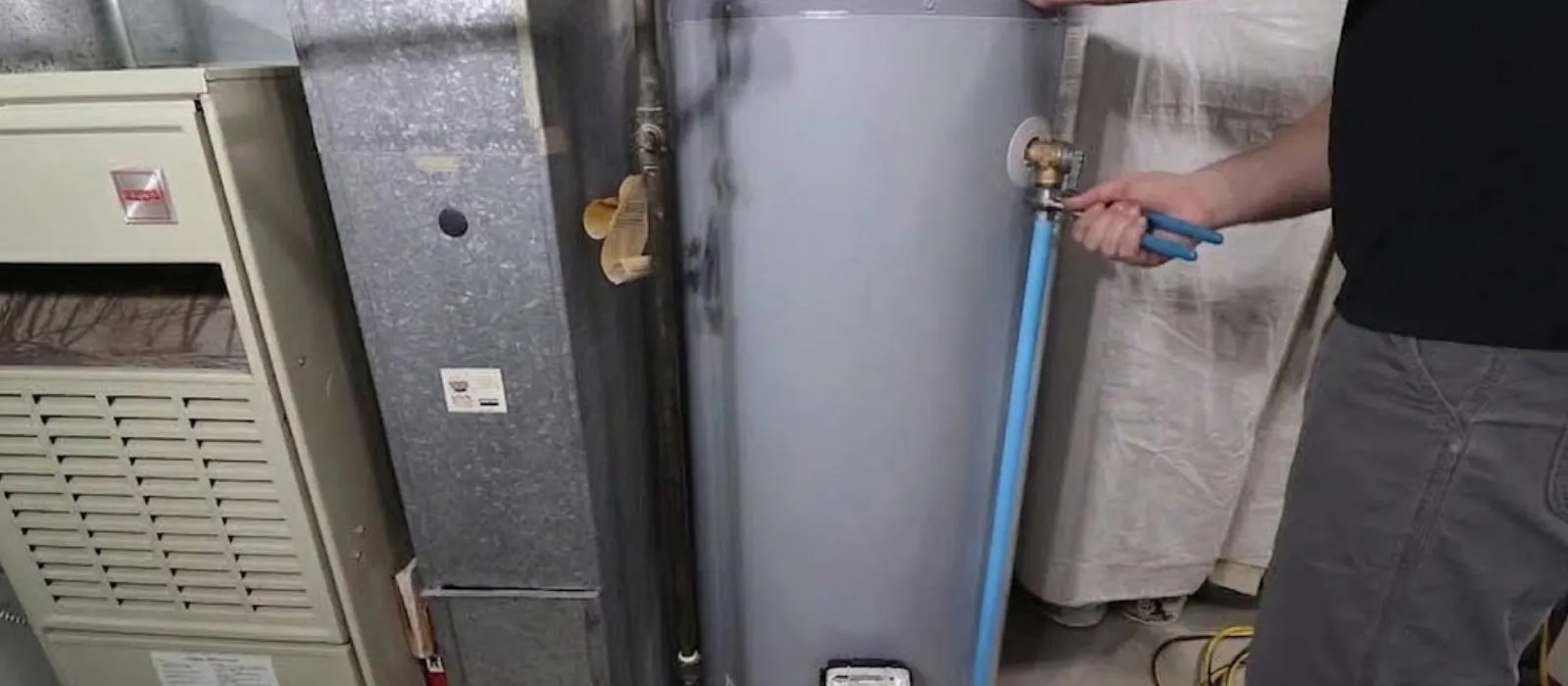
Why a water heater needs an expansion tank
When water heats, it takes up more space. In an open plumbing system the extra volume pushes back into the city main. In a closed system, where a check valve, a backflow preventer or a pressure reducing valve stops water from flowing backward, the extra volume has nowhere to go and pressure climbs in the pipes.
A thermal expansion tank is a small tank with an air cushion and a rubber diaphragm. It absorbs the extra water as the heater runs and releases it as the water cools. Without one, pressure spikes can stress the heater, wear fixtures and make the relief valve drip.
This guide explains how to tell whether your house needs one, how it is sized and installed and how to check it.
Signs a house may need an expansion tank
None of these proves a problem, but together they point to one.
A dripping relief valve
The valve opens when pressure climbs, even for a moment.
Banging pipes
Pressure swings can cause hammering when the heater fires.
A pressure gauge that rises when the heater runs
A gauge on a hose bib shows the spike.
Short fixture life
Faucets, hoses and appliance valves wear faster under high pressure.
A recent change to the plumbing
A new pressure reducing valve or backflow device can close a formerly open system.
How an expansion tank is installed
The work is a short plumbing job, but the details matter.
Check the pressure
The plumber tests house water pressure with a gauge.
Set the air charge
The tank's air pressure is set to match the house water pressure before it goes on.
Mount it
The tank is fitted on the cold water line near the heater, usually with a tee, and supported if it is large.
Test
The system is run through a heating cycle and checked for leaks and pressure.
Relief valve dripping?
Call and a plumber can test pressure and check for an expansion tank.
Sizing and placement
A tank that is too small does not do its job.
| Factor | What it affects |
|---|---|
| Heater capacity | A larger tank holds more water, so it expands more |
| House water pressure | Higher pressure needs a correctly charged tank |
| Tank orientation | Many tanks hang or mount upright. Follow the maker's instructions |
| Support | A heavy tank on a copper line needs a bracket |
How to tell if your expansion tank has failed
Tap the tank with a knuckle. The top should sound hollow and the bottom solid. If the whole tank sounds full, the diaphragm has likely failed and the tank is waterlogged. Press the air valve with a small tool. If water spits out, the tank has failed.
A failed tank is a cheap part to replace and an expensive one to ignore. See water heater installation for how a plumber adds one during a new heater job, and water heater repair if a dripping valve is already the symptom.
Do not just cap the relief valve
Some people respond to a dripping relief valve by plugging it. Never do this. The valve is a safety device that prevents a dangerous pressure or temperature in the tank. Fix the cause with an expansion tank or a pressure reducing valve and leave the relief valve working.
Pressure reducing valves and thermal expansion
Many houses have a pressure reducing valve where the water line enters. It lowers high street pressure to a safe level, and it also acts like a check valve. That one valve can turn an open system into a closed one, even if nobody added a backflow device on purpose.
If your house has a pressure reducing valve and no expansion tank, ask a plumber to measure pressure while the heater runs. A gauge that climbs well above its resting number is the sign that thermal expansion has nowhere to go.
Checking your own tank in five minutes
You do not need tools beyond a tire gauge and a hand.
Look at the tank
Find the small tank hanging off the cold line near the heater.
Tap it
The top should sound hollow, and the bottom should sound solid.
Press the air valve
A drip of water means the diaphragm has failed.
Check the charge
Shut off the water, drain the pressure and compare the tank's air pressure with the house pressure.
Call if it fails
A failed tank needs replacing, and a plumber can match the right size.
What happens if pressure stays high
Repeated pressure swings are hard on every part of the plumbing system. Flexible supply hoses, fill valves and washing machine valves wear sooner. The heater's tank flexes with each cycle, and the relief valve can start to leak. Over time, a small problem becomes a larger repair.
A pressure gauge screwed onto a hose bib costs little and tells you a lot. Read it first thing in the morning, then again while hot water is running, and compare. If the number jumps, thermal expansion is a likely suspect, and a plumber can confirm.
What to do if the relief valve is discharging
The relief valve is a safety device. Treat a discharge seriously.
- Keep people away from the discharge pipe, because the water can be scalding.
- Never cap or plug the valve.
- Lower the heater's temperature setting and watch whether the discharge stops.
- Check the water pressure with a gauge.
- Call a plumber to test pressure and look for a failed expansion tank.
Water supply and permit notes for Grapevine
The City of Grapevine says its drinking water comes from Lake Grapevine and from water purchased from the Trinity River Authority. Whether your own house is a closed system depends on the devices on your service line, such as a backflow preventer or a pressure reducing valve, not on where the water originates.
The city adopted the 2021 International Plumbing Code (IPC) effective January 1, 2024, and its permit application includes a residential A/C and water heater change out category. Ask Grapevine Building Services at (817) 410-3165 whether adding a tank is covered by the permit for your heater job.
Source type: City of Grapevine 2024 water quality report and City of Grapevine code and permit pages.
Questions homeowners ask
Does every water heater need an expansion tank?
Not every one. It is needed when the plumbing is a closed system. A plumber can check your pressure and devices.
What happens without one in a closed system?
Pressure can spike each time the heater runs, stressing pipes, fixtures and the relief valve.
Does Grapevine require expansion tanks?
Permit and code questions depend on the job. Ask Building Services at (817) 410-3165 which rules apply to your install.
How long does an expansion tank last?
It depends. Test it by tapping and checking the air valve, and replace it if it is waterlogged.
Can I install one myself?
It is a simple plumbing job, but the air charge must match your pressure. Many people leave it to a plumber.
An expansion tank is a small part that protects a large investment. Check pressure, charge the tank to match and test it once in a while.
For service near you, see our Southlake plumbing page and the service area page.